An alternate way to set up a server between you and your friends is to set up a VPN (virtual private network). This method may be deemed unrecommended, and an inconvenience for many users due to the fact that all users who wish to connect to the server must download external software in order to join or create server.
- Setting Up Mac For Manual Ip Free
- Set Up Manual Ip Mac
- Ip Setting Manual Or Automatic
- Setting Up Mac For Manual Ip Settings
- Manual Ip Settings Windows 10
When organizing your home or small office network sometimes it can be easier to assign each computer it’s own IP address rather than using DHCP. Today we take a look at how to do it in OS X.
Previously we showed you how to set a Static IP in Windows, and you have a Mac machine on your network, you might want to assign it a Static IP as well.
Set Static IP in OS X
You will need to open System Preferences, once there open Network
It would be a good idea to to edit the Locations so that you can easily change from DHCP to manual IP simply. You will need to go to Edit Locations… with in the Network Preference Pane
Name it something that will let you remember what it is for.
Once you have named the new location you will click on the connection you want to set manually. In this example we will use Ethernet. From the Configure IPv4 drop down we will choose Manually.
Now we will add the IP Address, Subnet Mask, Router, DNS and Search Domains. In this example we will use Google’s DNS which is 8.8.8.8 and your Search Domain will depend on your network.
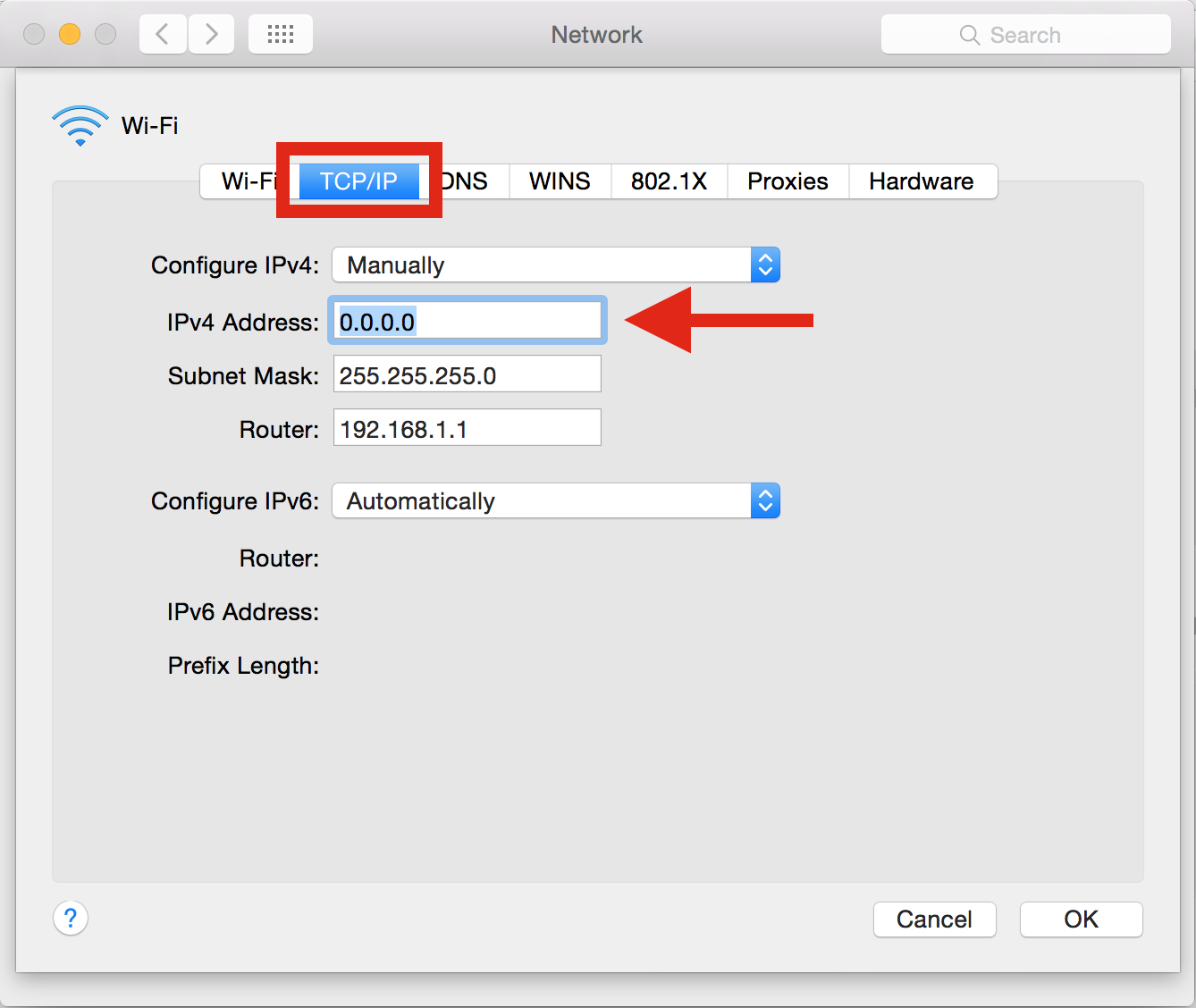
This is a handy little option to use if you are setting up your own small network for home office or even LAN parties. It can be helpful when troubleshooting networks as well.
Another OS X networking article you might be interested in is how to mount a Windows share in OS X.
READ NEXT- › How to Enable Google Chrome’s New Extensions Menu
- › How to Stop Spammers From Attacking Your Google Calendar
- › How to Power Off Your Samsung Galaxy Note 10 or 10 Plus
- › How to Switch from a Windows PC to a Mac
- › Want to Survive Ransomware? Here’s How to Protect Your PC
If your Mac was just repaired and now starts up to the setup assistant, learn how to restore your Mac from a backup.
Check for an Internet connection
It's best to set up your Mac somewhere that has a Wi-Fi network or other connection to the Internet. Your Mac will use that connection to complete certain setup steps. If the network requires a password, have the password ready.
Plug in only the essential devices
If you're using an external keyboard and trackpad or mouse, turn them on or plug them into your Mac. If you're using an external display, plug it in and turn it on as well, but don't connect any other peripherals yet. And of course plug in your Mac.
Setting Up Mac For Manual Ip Free
If you've never used a trackpad before, here's a tip: To click, press down or tap on the trackpad surface.
Turn on your Mac
Some Mac notebooks automatically start up when you connect the computer to power or open its lid. On other Mac computers, press the power button to start up.
Use the setup assistant
Set Up Manual Ip Mac
A series of windows will ask you for setup details, such as your Apple ID. If you've used iTunes or have an iPhone or iPad, you already have an Apple ID. Use the same Apple ID on your Mac.
Ip Setting Manual Or Automatic
We recommend that you let the setup assistant turn on FileVault, iCloud Keychain, and Find My Mac. You can also let it transfer information from another computer or Time Machine backup, or you can do that later using Migration Assistant.
Setting Up Mac For Manual Ip Settings
You'll be asked to create the name and password of your computer account. You'll need this information to log in to your Mac, change certain settings, and install software.
Check for software updates
When the setup assistant finishes setting up your Mac, you'll see the Finder, which includes a menu bar at the top of the screen and the desktop below that.
Manual Ip Settings Windows 10
Click App Store in the Dock at the bottom of your screen, then find and install any software updates. After your software is up to date, you can connect any printers or other peripherals and begin using your Mac.