Diskutil diskutil Man Page Repair a disk using Disk Utility on Mac How to manually partition (“Boot Camp”) your Mac for Windows 7Create a disk image using Disk Utility on Mac APPLE MACBOOK AIR USER MANUAL Pdf Download.How do manually mount hard drive on mac? How to Erase a Disk from mand Line in Mac OS XAPPLE MACBOOK AIR MACBOOK AIR 11 USER MANUAL Pdf Download.macos. Additionally, removable media will become eligible for safe manual removal; automatically-removable media will begin its physical (motorized) eject sequence. To use the disk as a non-startup disk with any Mac, or to create a multiplatform compatible startup disk. Diskutil listRAID and diskutil checkRAID are deprecated synonyms for.
- Diskutil Mac Manual Download
- Diskutil Mac Manual Software
- Mac Diskutil Commands
- Diskutil Format Usb
- Mac Manual Download
- Diskutil Erasevolume
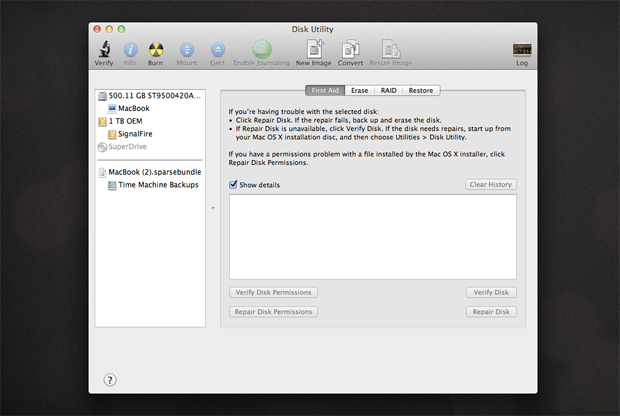
You can use Disk Utility to create a disk image, which is a file that contains other files and folders.
Note: You can burn information to a CD or DVD using the Burn command in the Finder. See Burn CDs and DVDs.
Create a blank disk image for storage
You can create an empty disk image, add data to it, then use it to create disks, CDs, or DVDs.
In the Disk Utility app on your Mac, choose File > New Image > Blank Image.
Enter a filename for the disk image, add tags if necessary, then choose where to save it.
This is the name that appears in the Finder, where you save the disk image file before opening it.
In the Name field, enter the name for the disk image.
This is the name that appears on your desktop and in the Finder sidebar, after you open the disk image.
In the Size field, enter a size for the disk image.
Click the Format pop-up menu, then choose the format for the disk:
If the disk image will be used with a Mac that has a solid state drive (SSD) and uses macOS 10.13 or later, choose APFS or APFS (Case-sensitive).
If the disk image will be used with a Mac with macOS 10.12 or earlier, choose Mac OS Extended (Journaled) or Mac OS Extended (Case-sensitive, Journaled).
If the disk image will be used with a Mac or Windows computer and is 32 GB or less, choose MS-DOS (FAT); if it’s over 32 GB, choose ExFAT.
To encrypt the disk image, click the Encryption pop-up menu, then choose an encryption option.
Click the Partitions pop-up menu, then choose a partition layout.
Click the Image Format pop-up menu, then choose an option:
Sparse bundle disk image: Same as a sparse disk image (below), but the directory data for the image is stored differently. Uses the .sparsebundle file extension.
Sparse disk image: Creates an expandable file that shrinks and grows as needed. No additional space is used. Uses the .sparseimage file extension.
Read/write disk image: Allows you to add files to the disk image after it’s created. Uses the .dmg file extension.
DVD/CD master: Changes the size of the image to 177 MB (CD 8 cm). Uses the .cdr file extension.
Click Save, then click Done.
Disk Utility creates the disk image file where you saved it in the Finder and mounts its disk icon on your desktop and in the Finder sidebar.
In the Finder, copy your files to the mounted disk image, then eject it.
Restore the disk image to a disk.
For more information about disk image types, see the manual (man) page for hdiutil.
Create a disk image from a disk or connected device
You can create a disk image that includes the data and free space on a physical disk or connected device, such as a USB device. For example, if a USB device or volume is 80 GB with 10 GB of data, the disk image will be 80 GB in size and include data and free space. You can then restore that disk image to another volume.
In the Disk Utility app on your Mac, select a disk, volume, or connected device in the sidebar.
Choose File > New Image, then choose “Image from [device name].”
Enter a filename for the disk image, add tags if necessary, then choose where to save it.
This is the name that appears in the Finder, where you save the disk image file before opening it.
Click the Format pop-up menu, then choose an option:
Read-only: The disk image can’t be written to, and is quicker to create and open.
Compressed: Compresses data, so the disk image is smaller than the original data. The disk image is read-only.
Read/write: Allows you to add files to the disk image after it’s created.
DVD/CD master: Can be used with third-party apps. It includes a copy of all sectors of the disk image, whether they’re used or not. When you use a master disk image to create other DVDs or CDs, all data is copied exactly.
To encrypt the disk image, click the Encryption pop-up menu, then choose an encryption option.
Click Save, then click Done.
Disk Utility creates the disk image file where you saved it in the Finder and mounts its disk icon on your desktop and in the Finder sidebar.
Important: Don’t create a disk image of a disk that you believe to be failing or that contains corrupted information. The disk image may not serve as a reliable backup.
For technical information about creating a restore disk image, see the Apple Software Restore (ASR) manual (man) page.
Create a disk image from a folder or connected device
You can create a disk image that contains the contents of a folder or connected device, such as a USB device. This method doesn’t copy a device’s free space to the disk image. For example, if a USB device or volume is 80 GB with 10 GB of data, the disk image will be 10 GB in size and include only data, not free space. You can then restore that disk image to another volume.
In the Disk Utility app on your Mac, choose File > New Image, then choose Image from Folder.
Select the folder or connected device in the dialog that appears, then click Open.
Enter a filename for the disk image, add tags if necessary, then choose where to save it.
This is the name that appears in the Finder, where you save the disk image file before opening it.
To encrypt the disk image, click the Encryption pop-up menu, then choose an encryption option.
Click the Image Format pop-up menu, then choose an option:
Read-only: The disk image can’t be written to, and is quicker to create and open.
Compressed: Compresses data, so the disk image is smaller than the original data. The disk image is read-only.
Read/write: Allows you to add files to the disk image after it’s created.
DVD/CD master: Can be used with third-party apps. It includes a copy of all sectors of the disk image, whether they’re used or not. When you use a master disk image to create other DVDs or CDs, all data is copied exactly.
Hybrid image (HFS+/ISO/UDF): This disk image is a combination of disk image formats and can be used with different file system standards, such as HFS, ISO, and UDF.
Click Save, then click Done.
Disk Utility creates the disk image file where you saved it in the Finder and mounts its disk icon on your desktop and in the Finder sidebar.
For technical information about creating a restore disk image, see the Apple Software Restore (ASR) manual (man) page.
Diskutil Mac Manual Download
Create a secure disk image
If you have confidential documents that you don’t want others to see without your permission, you can put them in an encrypted disk image.
Note: If you want to protect the contents of the system disk, turn on FileVault using the FileVault pane of Security & Privacy Preferences.
In the Disk Utility app on your Mac, choose File > New Image > Blank Image.
Enter a filename for the disk image, add tags if necessary, then choose where to save it.
This is the name that appears in the Finder, where you save the disk image file before opening it.
In the Name field, enter the name for the disk image.
This is the name that appears on your desktop and in the Finder sidebar, after you open the disk image.
In the Size field, enter a size for the disk image.
Click the Format pop-up menu, then choose a format:
If you’re using the encrypted disk image with a Mac computer using macOS 10.13 or later, choose APFS or APFS (Case-sensitive).
If you’re using the encrypted disk image with a Mac computer using macOS 10.12 or earlier, choose Mac OS Extended (Journaled) or Mac OS Extended (Case-sensitive, Journaled).
Click the Encryption pop-up menu, then choose an encryption option.
Enter and re-enter a password to unlock the disk image, then click Choose.
WARNING: If you forget this password, you won’t be able to open the disk image and view any of the files.
Use the default settings for the rest of the options:
Click the Partitions pop-up menu, then choose Single partition - GUID Partition Map.
Click the Image Format pop-up menu, then choose “read/write” disk image.
Click Save, then click Done.
Disk Utility creates the disk image file where you saved it in the Finder and mounts its disk icon on your desktop and in the Finder sidebar.
In the Finder , copy the documents you want to protect to the disk image.
If you want to erase the original documents so they can’t be recovered, drag them to the Trash, then choose Finder > Empty Trash.
Diskutil Mac Manual Software
When you’re finished using the documents on the secure disk image, be sure to eject the disk image. As long as it’s available on your desktop, anyone with access to your computer can use the documents on it.
To access the data in a disk image, double-click it. It appears on your desktop, and you can add, remove, and edit files on it just as you would with a disk.
Disk utilities - Format, Verify, Repair (local disks.) This includes options not available in the Disk utility GUI.
FORMAT
The format parameter of erase and partitioning (and RAID creation) is the filesystems name. You can determine this name by looking in /System/Library/Filesystems/<fs>.fs/Contents/Info.plistor by using the listFilesystems verb, which also lists shortcut aliases for common per- sonalities (these shortcuts are defined by diskutil for use with it only).
Some examples include: HFS+, HFS, JournaledHFS+, UFS, MS-DOS, etc.
Beginning with OS X El Capitan, system file permissions are automatically protected. It's no longer necessary to verify or repair permissions with Disk Utility (source).
Diskutil replaces the disktool utility found in earlier versions of OS X. (disktool is now deprecated)
Examples
List all attached disks and partitions - device names and partition identifiers (equivalent to lsblk on unix):
$ diskutil list
Get the Volume UUID (disk must already be mounted)
$ diskutil info disk0s2
Get the Volume ID of an IPOD
$ diskutil list |grep 'IPOD' |grep -o '(disk[0-9s]*)'
Mount a disk using its Volume ID
$ diskutil mount Disk1
Mac Diskutil Commands
Mount a disk using its UUID
$ diskutil mount B172F107-06D4-39E3-9F7C-57466CD6489B
Erase a disk
$ diskutil eraseDisk UFS UntitledUFS disk3
$ diskutil eraseDisk JHFS+ Untitled disk3
Erase a volume
$ diskutil eraseVolume HFS+ UntitledHFS /Volumes/SomeDisk
Partition a disk
Diskutil Format Usb
Important: you cannot create non-HFS partitions on a disk if you intend to boot macOS on it.
Use these partitioning commands on a second (or third) disk that you mount after booting.
Resize a volume and create a volume after it, using all remaining space
$ diskutil resizeVolume /Volumes/SomeDisk 50g MS-DOS DOS 0b
Resize a volume and leave all remaining space as unused
$ diskutil resizeVolume /Volumes/SomeDisk 12g
Convert a disk to Core Storage and encrypt it
$ diskutil coreStorage convert disk3s2 -passphrase
Shrink your Core Storage PV in order to make space for a Boot Camp volume
subtract desired Windows size from LV size, to be new LV size, i.e. 150g
$ diskutil coreStorage list
$ diskutil coreStorage resizeStack LVUUID PVUUID 150g ms-dos BOOTCAMP 0
Revert a disk from Core Storage back to plain HFS, possibly decrypting
$ diskutil coreStorage revert disk5
Remove a partition diskutil eraseVolume Free Space not disk0s4
Merge two partitions into a new partition
$ diskutil mergePartitions JHFS+ not disk1s3 disk1s5
Split a partition into three new ones:
$ diskutil splitPartition /Volumes/SomeDisk JHFS+ vol1 12g MS-DOS VOL2 8g JHFS+ vol3 0b
Create a RAID
$ diskutil createRAID mirror MirroredVolume JHFS+ disk disk2
Destroy a RAID
$ diskutil destroyRAID /Volumes/MirroredVolume
Repair a damaged RAID
$ diskutil repairMirror /Volumes/MirroredVolume disk3
Convert volume into RAID volume
$ diskutil enableRAID mirror /Volumes/ExistingVolume
Erase a partition and shrink to add an associated Recovery Partition
$ diskutil splitPartition disk8s2 JHFS+ MacHD R %Apple_Boot% %noformat% %recovery%
Mac Manual Download
“What you want, what you're hanging around in the world waiting for, is for something to occur to you” - Robert Frost
Related macOS commands:
Diskutil Erasevolume
asr - Apple Software Restore
authopen(1)
bless - Set volume bootability and startup disk options.
drutil - Interact with CD/DVD burners
Disk Utility (GUI) - The 'Info' button displays the disk identifier, UUID etc
diskarbitrationd(8)
hdid(8)
hdiutil - Manipulate iso disk images
hfs.util - HFS/HFS+ file system utility (Mount/unmount)
mount - Mount a file system
ntfs.util - NTFS file system utility
ufs.util - UFS file system utility (Mount/unmount)
SetFile(1) - Set extended attributes (Developer Tools)
Some rights reserved